Redlock
VonaJS provides an intuitive and easy-to-use distributed lock based on Redlock
Create Redlock
For example, create redlock in the module demo-student
1. Cli Command
$ vona :create:bean meta redlock --module=demo-student2. Menu Command
TIP
Context menu - [Module Path]: Vona Meta/Redlock
Redlock Definition
export type TypeRedlockLockResource = never;
export type TypeRedlockLockIsolateResource = never;

@Meta()
export class MetaRedlock extends BeanRedlockBase<
  TypeRedlockLockResource,
  TypeRedlockLockIsolateResource
> {}TypeRedlockLockResource: Defines the lock resources used by thelockmethodTypeRedlockLockIsolateResource: Defines the lock resources used by thelockIsolatemethod
Defining Lock Resources
When using distributed locks, we need to specify the corresponding lock resources. For example, defining a lock resource name for the lock method:
- export type TypeRedlockLockResource = never;
+ export type TypeRedlockLockResource = 'name';Using Redlock
class ControllerStudent {
  async test() {
    const res = await this.scope.redlock.lock('name', async () => {
      // do something in lock
      return 'some result';
    });
  }
}redlock.lock: Passing in the lock resourcename
lock/lockIsolate
VonaJS provides two lock methods: lock/lockIsolate. The difference between the two is that lockIsolate automatically implements datasource level, thus avoiding deadlocks caused by datasource contention.
- See: Datasource level
Defining Lock Resources: lockIsolate
Defining lock resources for the lockIsolate method:
- export type TypeRedlockLockIsolateResource = never;
+ export type TypeRedlockLockIsolateResource = 'name';Using Redlock: lockIsolate
class ControllerStudent {
  async test() {
    const res = await this.scope.redlock.lockIsolate('name', async () => {
      // do something in lock
      return 'some result';
    });
  }
}Defining Lock Resources: Literal Template
Lock resources can also be literal templates.
For example, if you want to provide separate lock resources for different users, you can use a string like user-${userId} as the lock resource name.
- export type TypeRedlockLockIsolateResource = 'name';
+ export type TypeRedlockLockIsolateResource = 'name' | `user-${string}`;This way, type hints can also be provided when using the lockIsolate method.
class ControllerStudent {
  async test() {
    const userId = 1;
    const res = await this.scope.redlock.lockIsolate(`user-${userId}`, async () => {
      // do something in lock
      return 'some result';
    });
  }
}Inspect
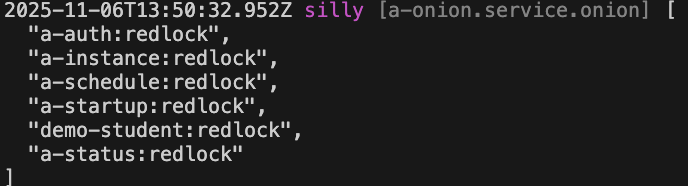
You can directly inspect the currently effective redlock list.
class ControllerStudent {
  @Web.get('test')
  test() {
+   this.bean.onion.meta.inspectMeta('redlock');
  }
}this.bean.onion: Get the global Service instanceonion.meta: Get the Service instance related to the meta.inspectMeta: Output the currently effective redlock list
When accessing the test API, the currently effective redlock list will be automatically output to the console, as shown below: